International summer school on generative AI · Rome 2026

From Graph
to Crew

A hands-on tour of agentic AI frameworks

LangGraph LangChain CrewAI
graph crew
Mohammad Dehghani
Director, AI2Lab · Northeastern University
Rome · June 25, 2026
90-minute hands-on session
Mohammad Dehghani
Speaker
Mohammad Dehghani
Teaching Professor, Northeastern University · Director, AI2Lab
Generative AI & simulation Reinforcement learning Simulation-optimization Agentic AI
Northeastern University ai2lab.ai
Agenda
The next 90 minutes
01
Agentic AI
from single agents to coordinated systems
02
The two frameworks
LangGraph and CrewAI
03
Build it yourself
the World Cup lab, live in Colab
From Graph to Crew
How this works
This is a workshop, not a lecture
Pair up
Form groups of 2 to 3, right now.
Discuss and vote
Build together
We finish hands-on in Colab.
Turn to the people next to you now, that is your team for the session.
From Graph to Crew
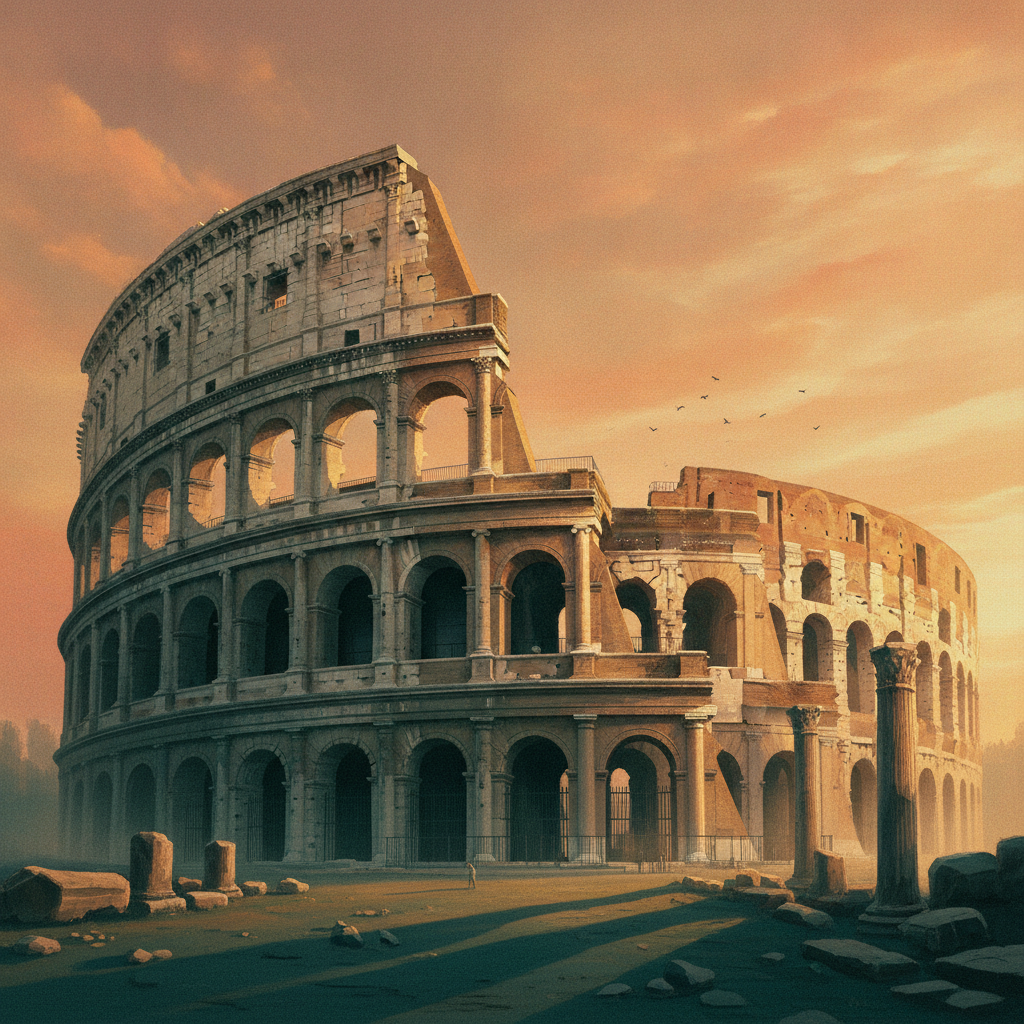
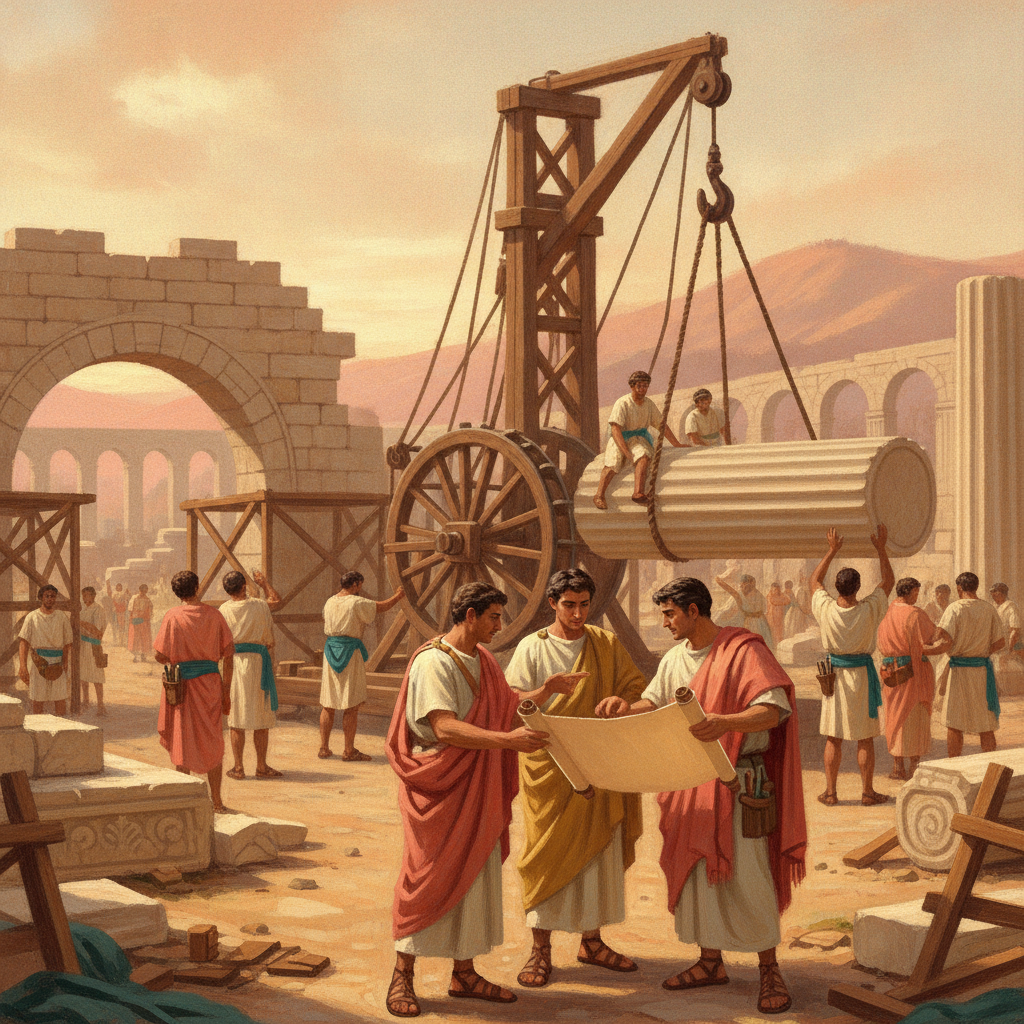
The Colosseum
~10
years to build
50,000
spectators
80
gates, emptied in minutes
Pair · Think · Share
If you were the emperor, which approach would you use?
A
Follow one master plan
Design Foundation Structure Finish
LangGraph
A graph
A workflow you draw, step by step. This is LangGraph.
B
Assemble specialist teams
lead engbuildcheck
CrewAI
A crew
A team you assemble, each with a role. This is CrewAI.
Discuss in your group of 2 to 3 for two minutes, then a quick show of hands.
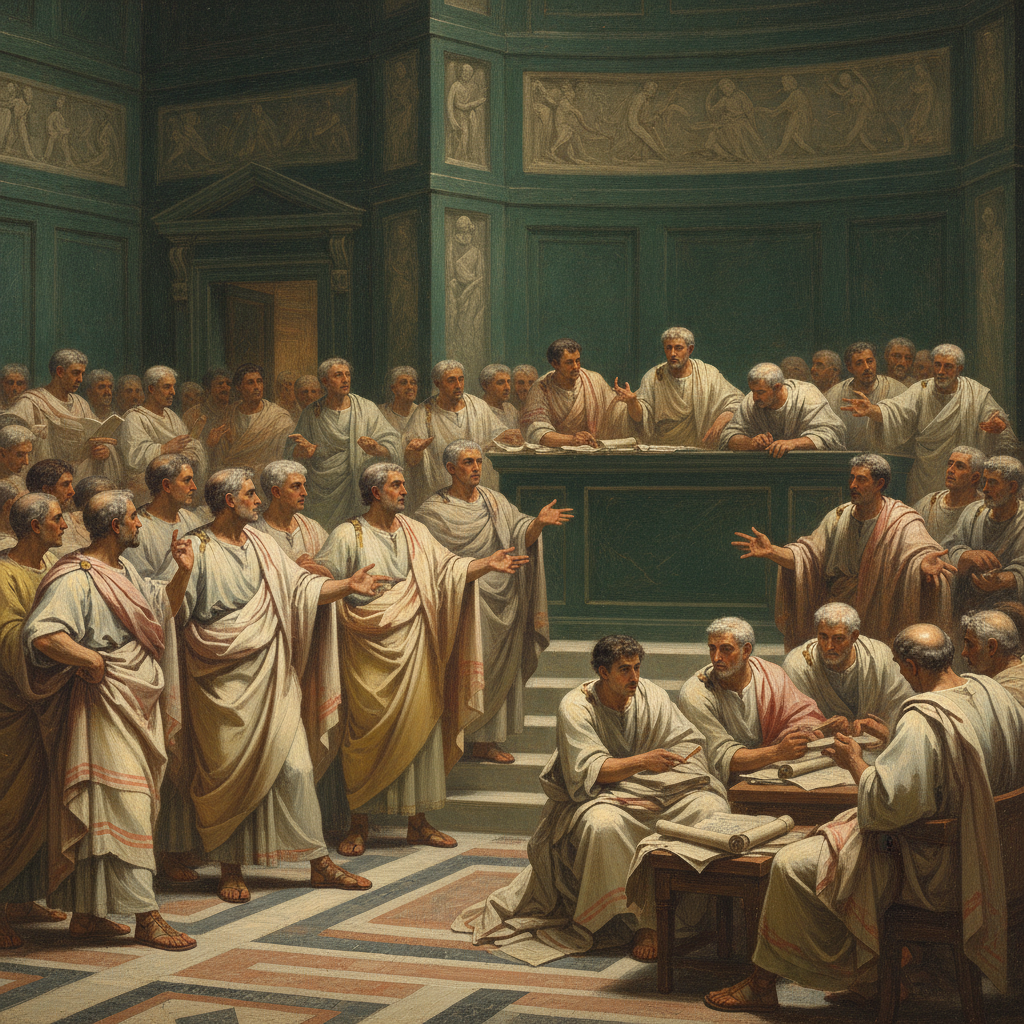
Roman senate in session
01

Agentic AI

From single agents to coordinated systems.

From Graph to Crew
Context
How we got here

Press the arrow to walk the timeline.

2022ReAct
2023AutoGPT, BabyAGI
2023AutoGen
2024LangGraph
2024CrewAI
2025OpenAI SDK, Google ADK
2026Agentic AI
2022
ReAct
The paper that made an LLM reason and act in one loop — think a step, take an action, look at the result, repeat. Before it, models could reason aloud (chain-of-thought) or call a tool; ReAct fused the two. It is still the blueprint behind almost every agent built since.
2023
AutoGPT, BabyAGI
Hand it a single goal and it writes its own to-do list, then works the tasks one by one with no human in between. They went viral in early 2023 and showed how far raw autonomy could reach — and also its limits: drifting, looping, burning tokens. The hype cooled; the lesson stuck.
2023
AutoGen
Microsoft's framework for several agents that talk to each other to finish a task — a coder, a critic, and a user-proxy passing messages back and forth. One of the first toolkits to make multi-agent conversation practical, and a clear influence on the crews that came next.
LangGraph2024
LangGraph
Agents drawn as an explicit graph: nodes do the work, edges set the flow, a shared state carries the data, and cycles let it loop or retry. You trade a little simplicity for fine control and human-in-the-loop checks. One of our two focus frameworks today.
CrewAI2024
CrewAI
Agents as a crew of roles: write each one's role, goal and backstory, hand them tasks, and a process runs them in order. Minimal wiring, quick to stand up, great for clean role decomposition. Our other focus framework — and notably its own, independent of LangChain.
2025
OpenAI SDK, Google ADK
The big labs ship their own official agent frameworks. Building agents stops being a community experiment and becomes standard, supported infrastructure — a strong signal the pattern is here to stay.
2026
Agentic AI, mainstream
Agentic AI is now everywhere — in products, research, and everyday tooling. Which is exactly why we are here: you are about to build the same World Cup task twice, once as a crew and once as a graph.
From Graph to Crew
The story of agents · 1 of 3
Single-agent models
Reason Act Observe tools memory
Agent = LLM + tools + memory + a loop
It reasons, acts, observes the result, and repeats.
BUT…
One context window everything shares the same memory
One perspective it repeats the same few approaches
Long tasks drift multi-step work loses the thread
Serial by nature one step at a time, no parallelism
Give that loop a memory to reflect and it improves itself — Reflexion, Shinn et al. 2023 (80% → 91% on HumanEval)
From Graph to Crew
The story of agents · 2 of 3
Multi-agent models
coordinator specialist agents
Many agents = roles + a process + separate contexts
Each agent owns a job and its own working memory.
SO…
Parallel agents work at the same time
Many perspectives different roles, different angles
Fresh context each agent has its own window
Specialized each is expert at one job
A group's performance tracks its coordination, not its smartest member — Woolley et al., Science 2010
From Graph to Crew
Pair · Think · Share
To build it for real, which would you reach for?
Single agent
Often the efficient choice
At equal compute, single agents match or beat multi-agent on many tasks.
Source: "Single-Agent LLMs Outperform Multi-Agent…" arXiv:2604.02460
Multi-agent
Wins on collaboration
Better for multi-domain, collaborative tasks, but watch the 14 known failure modes.
Source: Cemri et al. (2025), "Why Do Multi-Agent LLM Systems Fail?"
Decide with your group.
From Graph to Crew
What the research says
One strong agent, or a coordinated team?
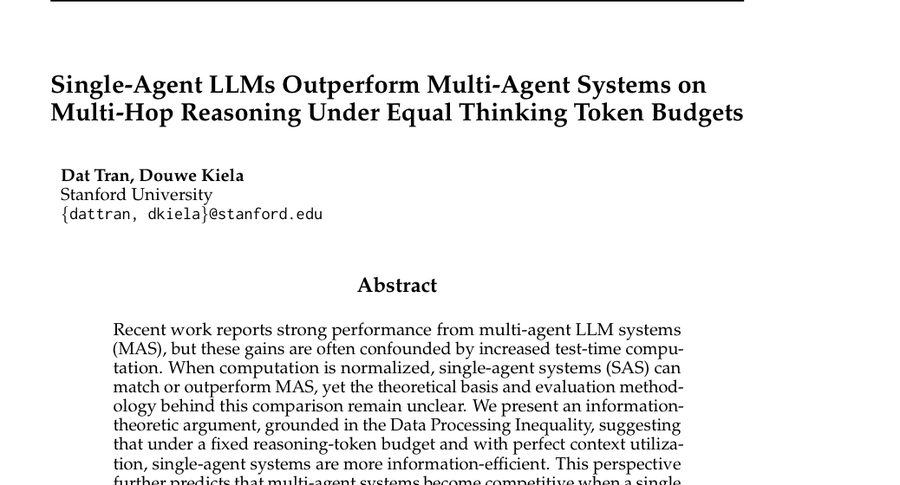
Single-Agent LLMs Outperform Multi-Agent Systems
The case for one
Single agents can beat a team
  • At an equal thinking-token budget, one agent outperforms a multi-agent system on multi-hop reasoning
  • Coordination and message-passing overhead often eats the gains
Tran & Kiela, Stanford · arXiv 2026
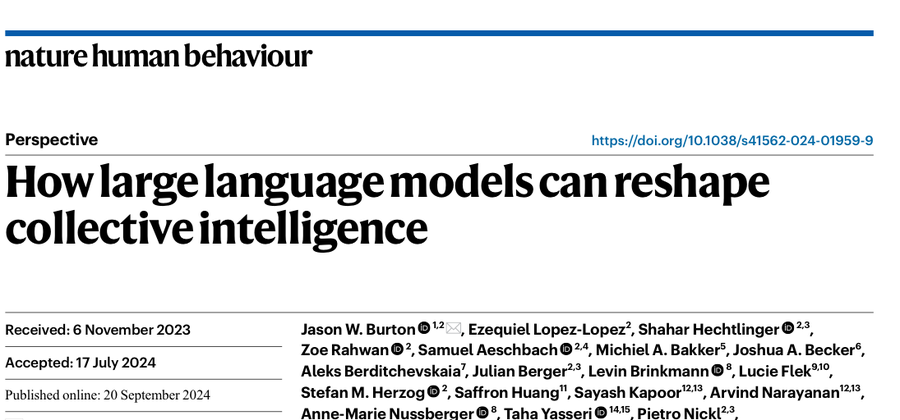
How large language models can reshape collective intelligence
The case for many
A crowd can beat any expert
  • Diverse groups outperform any individual — the wisdom of crowds
  • LLMs can aggregate and reshape that collective intelligence at scale
Burton et al. · Nature Human Behaviour, 2024
vs
From Graph to Crew
The story of agents · 3 of 3
From one agent to many
Single
one agent + its tools
Supervisor
a lead delegates to workers
Hierarchical
leads run sub-teams
Network
agents talk peer-to-peer
Input Orchestrator Finance IT Risk Research Forecast Pipeline Security Risk an. Comply Synthesizer Output memory
From Graph to Crew
The toolkit
Three SDKs, three philosophies

The patterns you just saw, now in code. We build with all three today.

LangChain
CHAIN
Chain prompts, models, tools
linear pipelines, 700+ integrations
LangGraph
GRAPH
Workflow as a state graph
fine control: branches, loops, retries
CrewAI
CREW
Agents with roles, on a team
multi-agent crews, minimal wiring

From Graph to Crew · a hands-on tour of each comes next.

From Graph to Crew
02

The two frameworks

Two philosophies of control: a graph you draw, and a crew you assemble.
From Graph to Crew
Mental model
Two mental models
Graph, a state machine you draw
  • Explicit control flow: nodes, edges, branches, loops
  • A shared State object updates at each node
  • Strength: control, reliability, branching and loops
scout stats write loop
Crew, a team you assemble
  • Roles, the agents, plus tasks to complete
  • A process coordinates who acts and when
  • Strength: speed, role decomposition, delegation
process agent agent agent
Bottom line: Graph trades convenience for control. Crew trades control for convenience.
From Graph to Crew6 / 14
Framework 1 · the foundation
LangChain — where it began
A chain runs left to right — each step's output becomes the next step's input.
Prompt
wraps your question
"weather in Rome?"
LLM
the model responds
→ "use a tool"
Parser
turns text into data
{ city: Rome }
Tool
runs the action
get_weather()
Output
returns the answer
24°C, sunny
Founder storyHarrison Chase· LangChain's creator
Oct 2022
A side project
glue for LLM plumbing
Nov 2022
ChatGPT lands
just weeks later
2023
Becomes a company
+ Ankush Gola
today
The default toolkit
+ LangGraph, LangSmith
GitHub stars · approx. 2026
LangChain130k
LangGraph50k
CrewAI46k
~130k+ stars · 700+ integrations · 35% of the Fortune 500 · 1B+ downloads
From Graph to Crew
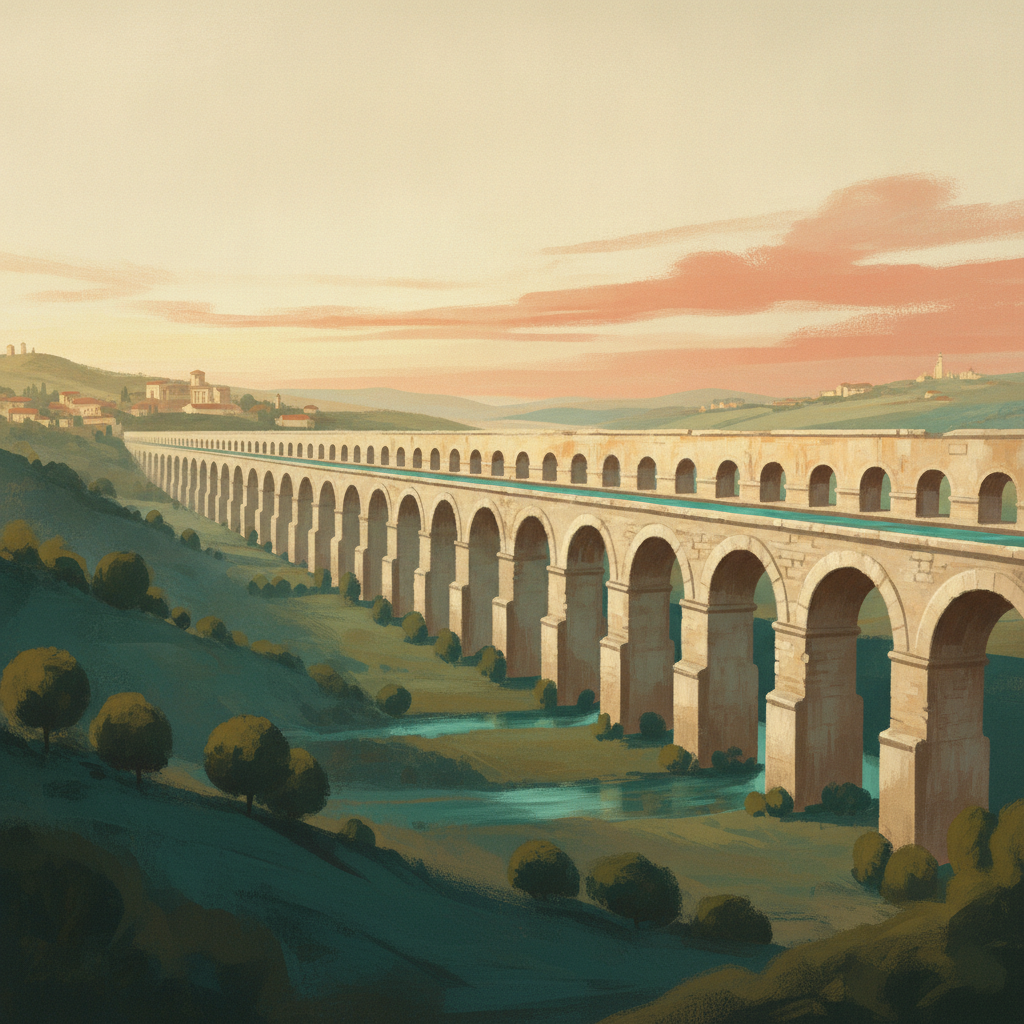
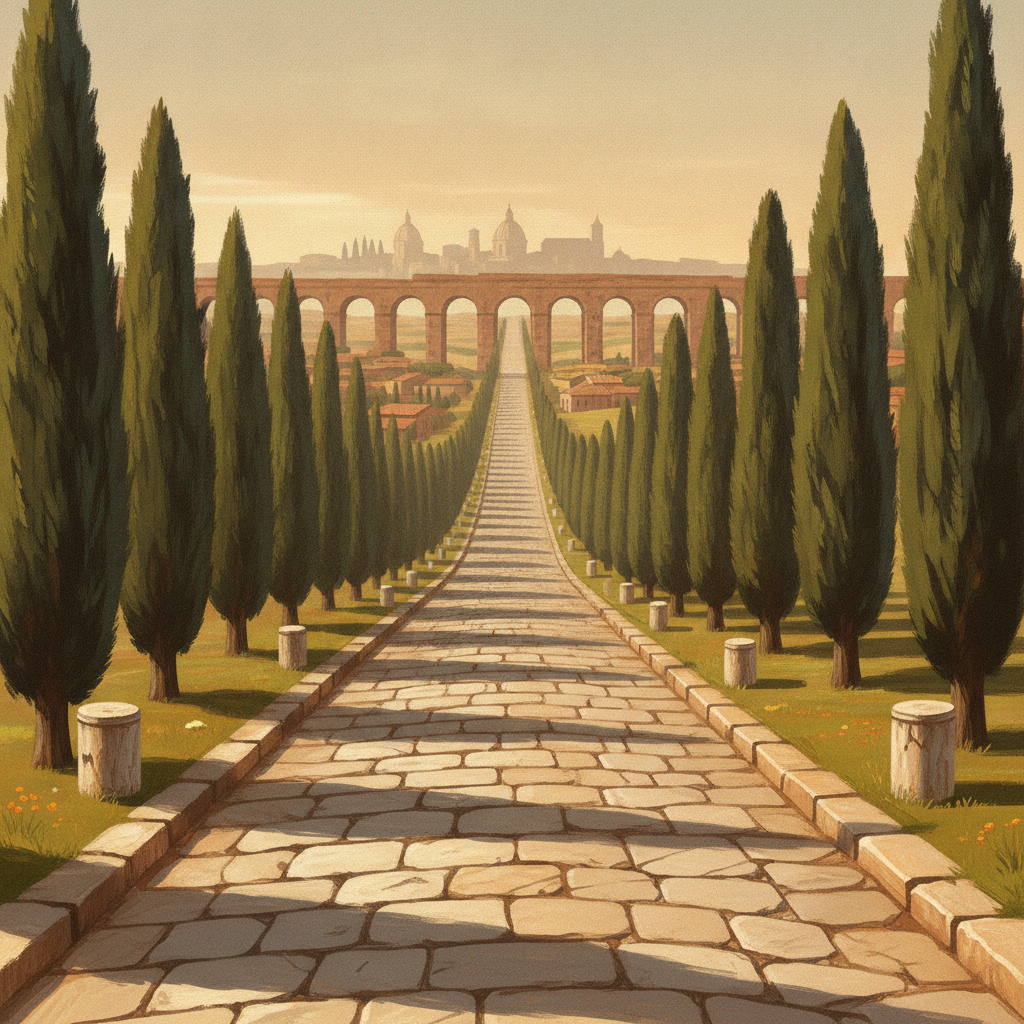
An ancient Roman road leading to the distant city of Rome
A Roman parallel · ancient Rome

All roads lead
to Rome

The original graph

Every city a node, every road an edge — a fixed network, so the same route behaved the same way every time.

400,000
km of road at its peak
~80,000
km stone-paved, built to last
1
fixed network — like a graph
Source · Wikipedia, "Roman roads"
Framework 2 · control
LangGraph — the agent core
One LangGraph agent orchestrates everything: the UI, the LLM, auth, and tool calls.
token exchange Auth0 GGoogle Assistant0 User UIVercel AI SDK AI Agent LangGraph LLM · OpenAI token request Gmailaccess token Calculatora tool SerpApiAPI key tool calling
Built by the LangChain team
— the answer to chains' limits.
  • Nodes & conditional edges
  • Cycles, retries, durable runs
  • Persistent, inspectable state
  • Human-in-the-loop approval
Jan 2024
launched
v1.0
late 2024
38.8M
downloads / mo
In production: Klarna · Replit · Elastic
From Graph to Crew
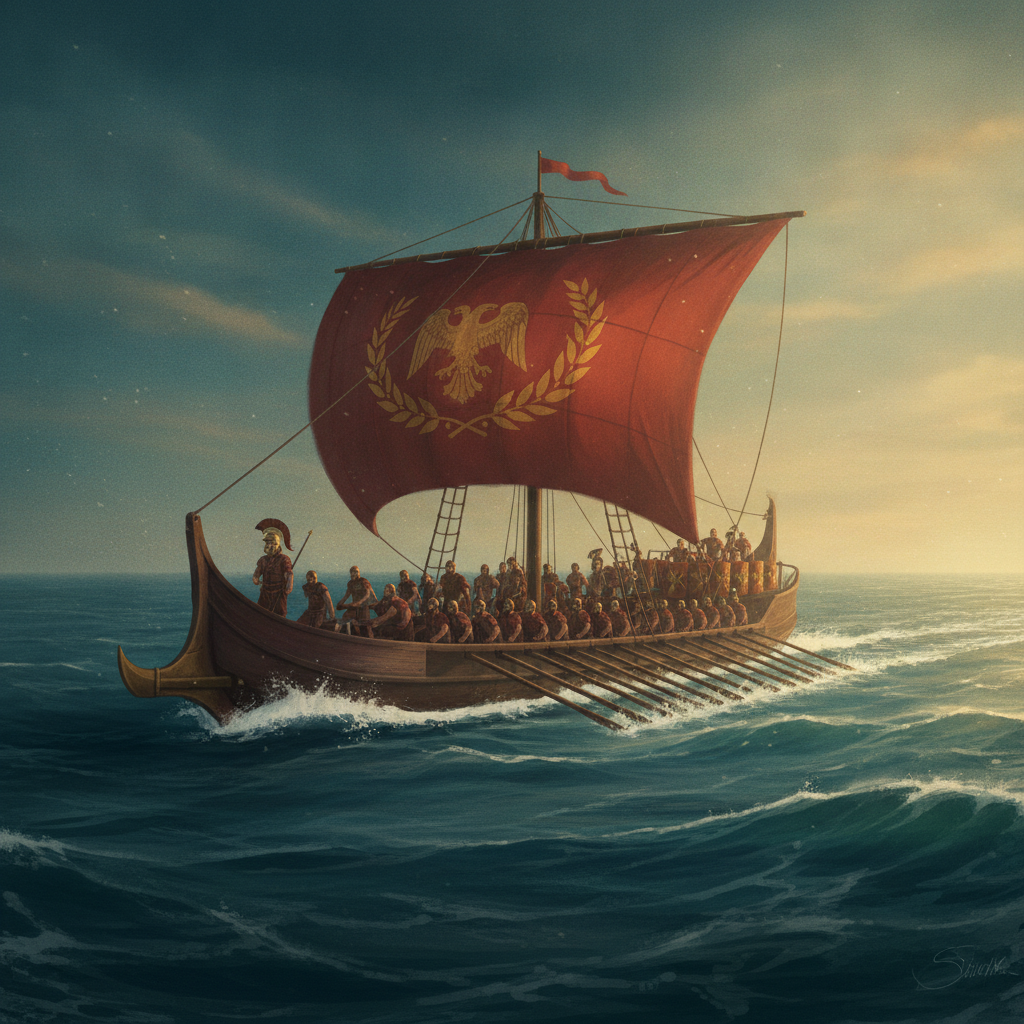
An ancient Roman galley rowing in unison across the sea
A Roman parallel · ancient Rome

The crew that
moved an empire

The original crew

No single driver. Many rowers, each one role, kept in time by a drummer — the process. Together, the result.

~170
oarsmen, each a role
3
stacked tiers of oars
1
drumbeat — the process
Source · Wikipedia, "Trireme"
Framework 3 · teams
CrewAI — role-based crews
A crew of role-playing agents runs tasks in sequence — sharing knowledge, memory & tools — to finish one job.
KnowledgePDF · CSV · vectors Memoryshort & long-term Toolssearch · APIs Crew Researcher Writer Editor Job Task 1 Task 2 Task 3 Result then then
The twistCrewAI is its own framework — independent of LangChain.
Dec 2023
founded
45.9k
GitHub stars
12M+
daily agent runs
$18M
raised · Insight, A. Ng
From Graph to Crew
Decision
Which one, and when
LangGraphfine-grained
control
Think in
nodes, edges, state
Reach for it when
branching, loops, human-in-the-loop, strict reliability
Learning curve
steeper — you wire the flow yourself
CrewAIhigher-level
convenience
Think in
agents, tasks, process
Reach for it when
quick teams, clean role decomposition, fast wins
Learning curve
gentler — write the job descriptions
Reality check: not enemies. You can wrap a Crew inside a Graph node.
From Graph to Crew9 / 14
03

Build it yourself

One World Cup task, two architectures, live in a Colab notebook.
From Graph to Crew
Interactive · quiz
Graph or Crew? Vote
1. A strict approval workflow with a human sign-off step.
GGraph
needs control and a human in the loop
2. A campaign by a researcher, a writer, and an editor.
CCrew
clean role decomposition
3. A loop that retries until the tests pass.
GGraph
an explicit loop
4. A quick travel-planner team.
CCrew
a fast, simple team
Vote by hand first. The axis is control versus collaboration.
From Graph to Crew10 / 14
Case study

The World Cup lab

Italy vs Brazil. Build a match scouting report twice: once as a Crew, once as a Graph.

Lab
The match-analysis crew

Input: two teams, for example Italy vs Brazil. Output: a scouting report.

Scout · web search or mock data
Stats Analyst · reads the numbers
Tactics Analyst · reads the shape and style
Report Writer · assembles the report
The twist: same task, built twice
Build 1
CrewAI
a role-based crew
Build 2
LangGraph
an explicit graph

Same goal, two architectures — feeling the contrast is the whole lesson.

From Graph to Crew11 / 14
Lab
One task, two architectures
LangGraph START scout stats tactics write END need more data?
CrewAI Scout agent Stats Analyst Tactics Analyst Report Writer

Caption: the graph makes the loop explicit. The crew hides it inside the process.

From Graph to Crew12 / 14
Hands-on
Let us build it
  1. Setup and install
  2. Tools: web search or mock data
  3. Build 1 — the CrewAI version
  4. Build 2 — the LangGraph version
  5. Pair, think, share — then stretch: a new tool or role
Each person adds their own API key as a Colab secret. Keys never go into the repo.
Everything is here
www.ai2lab.ai/RomeGenAI
notebook, slides & links — find your own way in
From Graph to Crew
Rome 2026 · From Graph to Crew

Grazie.

Thank you — now go build one.

Mohammad Dehghani
Teaching Professor, Northeastern University · Director, AI2Lab
m.dehghani@northeastern.edu www.ai2lab.ai/RomeGenAI
LinkedIn
Connect on LinkedIn
Agenda

Speaker notes